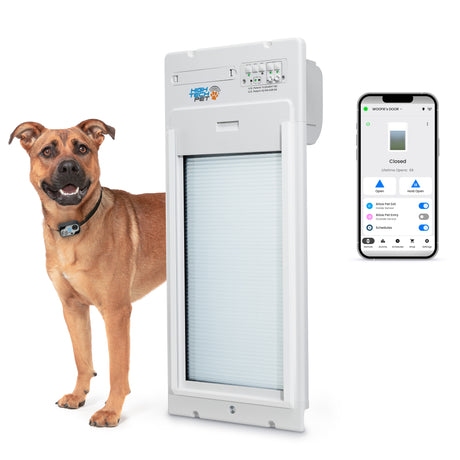


A pet door that's fine in mild spring weather can become a real liability once temperatures swing toward either extreme. Winter drafts and summer heat gain both exploit the same weak point — a poorly insulated panel and a loose seal — just in opposite directions. If you live somewhere with genuine seasonal extremes, here's what separates a pet door built to handle it from one that's just going to struggle twice a year.
Why insulation matters in both directions
People tend to associate "insulated" with keeping cold out, but the same construction that blocks winter drafts also blocks summer heat from working its way in. A dog door with a thin, single-layer flap and a loose frame seal performs poorly in both directions — it's not a cold-weather-only or hot-weather-only problem, it's a year-round performance gap that just shows up differently depending on the season.
What actually makes a panel insulated
Look for a foam-core or double-walled flap rather than a single sheet of rigid plastic, along with a tight-closing seal — magnetic or brush-lined — around the flap's edges. These two things do most of the work of keeping conditioned air where it belongs, regardless of which direction the temperature difference is running.
Cold weather performance: winter drafts and frozen seals
In genuinely cold climates, an inadequately insulated dog door creates a noticeable cold spot and a steady draft that your heating system has to compensate for continuously. It's also worth checking how the seal performs in freezing conditions specifically — some lower-quality flap materials stiffen or crack in extreme cold, which defeats the seal entirely right when you need it most.
Hot weather performance: keeping cool air in
The reverse problem shows up in summer: an under-insulated door lets outside heat creep into a cooled home, and your air conditioning works harder to offset it. This matters most in regions with genuinely hot summers, where a poorly sealed pet door can be a measurable contributor to a higher cooling bill, not just a minor comfort issue.
Frame sealing matters as much as the panel
As with any weatherproofing question, the frame installation is at least as important as the product itself. A well-insulated panel installed with a poorly sealed frame still leaks air around the edges — the panel and the frame need to work together, and that depends heavily on installation quality, not just the product spec sheet.
What to check before buying for extreme climates
If you're in a region with genuine seasonal extremes in either direction, look specifically for an insulation rating or spec (not just the word "insulated" on the packaging), confirm the flap material's cold-weather flexibility if winters get seriously cold, and don't treat installation as an afterthought — even the best-insulated door underperforms with a sloppy frame seal.
Ready to Upgrade?
An insulated pet door isn't a cold-weather-only feature or a summer-only feature — it's a year-round performance question that shows up most obviously at the extremes. Whether your climate leans toward brutal winters, scorching summers, or both, the fix is the same: a genuinely insulated panel, a tight seal, and a careful installation.