

Shopping for a dog door usually turns into scrolling through nearly identical spec sheets, all claiming to be "durable," "secure," and "easy to install." Rather than taking those claims at face value, here's what to actually check before you buy — the features that determine whether a door holds up for years or becomes a source of regret within a season.
Build quality and materials
The flap or panel material is doing the most work over the door's lifetime, and it's also where corners get cut most often. Look for UV-resistant, impact-rated panel material rather than basic plastic that can become brittle or discolored after a season or two in direct sun. Frame material matters too — metal or reinforced composite frames hold up to repeated daily use far better than lightweight plastic housings.
Size and breed fit, not just weight range
A lot of sizing guides go by weight alone, which misses real differences in build between breeds. A stocky, barrel-chested dog and a lean dog of the same weight need different opening widths, and a dog that's still growing needs some margin built in. When in doubt, measure your specific dog's chest width and standing height rather than relying only on a generic weight chart.
Locking and authentication type
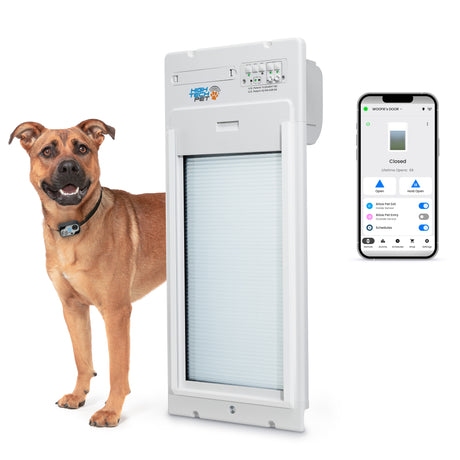
This is the single most important spec on the sheet, and the easiest to gloss over. A simple flap or magnetic latch offers essentially no selectivity — it opens for anything that pushes on it. Collar-based or microchip-based authentication is what actually keeps the door working only for your dog, which matters most if wildlife, strays, or neighborhood animals are a concern where you live.
Weatherproofing that goes beyond the flap
People check whether the flap itself seems insulated but often skip checking the frame seal, which is just as responsible for keeping drafts, heat, and moisture out. A door that's insulated at the flap but loosely sealed at the frame still underperforms — both need attention, not just the part that's easiest to feel with your hand in the store.
Installation difficulty and what it actually requires
Some doors are designed for a straightforward DIY install into an existing door; others require cutting into a wall or exterior material, which is a bigger project regardless of how "easy" the manufacturer claims it is. Be honest about what you're willing to take on yourself versus what you'd rather hire out, and check whether the model you're considering matches that — not after you've already bought it.
Multi-pet and cross-species compatibility
If you've got a cat as well as a dog, check whether the same door can realistically serve both. Many dog doors work fine for a cat as long as the opening size and authentication method (especially collar range) accommodate a smaller pet, but this isn't universal — some larger dog-focused doors have thresholds or flap weights that are genuinely difficult for a cat to manage. If one door for the whole household matters to you, confirm cross-species compatibility explicitly rather than assuming it.
Ready to Upgrade?
The features that actually matter on a dog door are build quality, an accurate size fit for your specific dog, real selective locking rather than a simple flap, weatherproofing at both the flap and the frame, an installation process you're prepared for, and — if it applies to your household — genuine multi-pet compatibility. Check those six, and the rest of the spec sheet mostly takes care of itself.