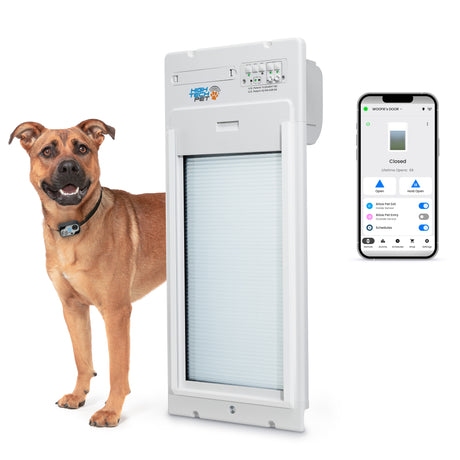


Not every dog walks straight through a new doggie door on day one. A flap that moves, a mechanism that clicks or hums, or simply an opening they've never used before can all be enough to make a dog hesitate — and pushing them through it before they're ready usually backfires, making them warier rather than more confident. A little structured training goes a long way toward turning a new doggie door from a source of hesitation into something they use without a second thought.
Why some dogs need training just to use the door at all
Dogs that seem generally confident can still be genuinely uncertain about a new doggie door, especially one with an automatic locking mechanism that clicks or hums when it activates. This isn't stubbornness — it's a reasonable reaction to a moving, unfamiliar object where a solid wall used to be. Recognizing this as a training gap rather than a behavior problem makes the next steps much easier to approach patiently.
Start with the door propped open
Before introducing the flap or locking mechanism at all, use the door's hold-open setting (or physically prop the flap up) so your dog can walk through a clear, unobstructed opening. Let them go back and forth freely for several days at this stage — the goal is just building familiarity with the doorway itself, with nothing moving or resisting them.
Bring in treats and positive reinforcement
Once your dog is comfortable walking through the open frame, start rewarding them specifically for approaching and passing through it — a treat and praise every time, so the doorway becomes something they associate with a good outcome rather than something to avoid. Keep sessions short and end on a success rather than pushing until your dog loses interest or gets frustrated.
Introduce the flap gradually
With the open-frame stage solid, lower the flap partially rather than releasing it fully closed right away, if your model allows it. Encourage your dog to nose or paw it open with treats held just on the other side. Many dogs need several short sessions here before they'll push through a fully closed flap on their own — that's normal, not a sign of a problem.
Introduce the automatic mechanism last
Once your dog is reliably pushing through the flap manually, activate the automatic locking mechanism and let them experience the door unlocking specifically for their collar. Stay nearby for the first several uses, since the sound or brief delay of the mechanism activating is often the last hesitation point for dogs that have otherwise gotten comfortable with the flap itself.
Handling setbacks
A dog that was using the door confidently and suddenly stops isn't unusual, and it's rarely a sign you need to start over completely. A loud noise near the door, a startling encounter on the other side, or even a battery change in the collar can cause temporary hesitation. Go back one stage — prop the door open again briefly, rebuild confidence with treats, and most dogs return to independent use within a few days.
Ready to Upgrade?
Training a dog to use a doggie door works best as a series of small, successful steps rather than one big introduction: open frame first, then a manual flap, then the automatic mechanism, with treats and patience carrying each stage. Rushing any one of these is usually what turns a temporary hesitation into a longer-term avoidance habit.