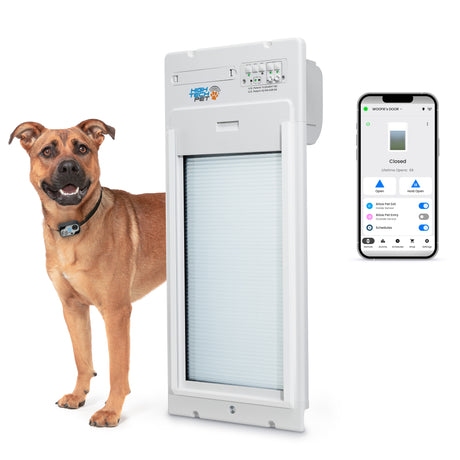


A large dog door isn't just a bigger version of a small one — it's a bigger decision, full stop. The same opening that comfortably fits a 90-pound dog also comfortably fits a person, which means safety and security deserve more scrutiny here than they would on a cat-sized flap. Whether you're retrofitting an existing door or buying one with a doggie door built in, here's what actually matters before you commit.
Why size changes the security math
A small pet door is rarely a realistic entry point for anything but the pet it's built for. A large dog door is a different story — it's sized for a full-grown dog, which means it's also sized for a child or smaller adult to fit through if the opening isn't secured. This isn't about assuming the worst; it's about not leaving an obvious gap in an otherwise secure home just because the opening happens to be pet-shaped.
Locking mechanism: flap latch vs. true deadbolt
A standard flap or magnetic latch offers essentially no resistance to someone pushing through from outside — fine for a small opening, a real gap for a large one. Look specifically for a true mechanical deadbolt rather than a heavier-duty flap, since a deadbolt is a fundamentally different locking mechanism built to resist force, not just weather and casual nudging.
Panel strength and forced-entry resistance
Beyond the lock, the panel material itself matters. A thin plastic flap can be kicked or cut through even if the lock holds; a reinforced or impact-rated panel raises the bar considerably. If security is a real priority for your home — ground-floor installation, a street-facing wall, or a rural property with wildlife concerns — ask specifically what the panel is rated for, not just whether the door "feels sturdy."
Built-in vs. retrofit: what actually differs
A door with the pet opening built in at manufacture tends to have a more integrated seal and frame than a flap cut into an existing door after the fact, which can mean better weatherproofing and a cleaner fit long-term. Retrofitting isn't automatically worse — plenty of well-installed retrofit units perform just as well — but it does put more weight on installation quality specifically, since you're introducing a new opening into material that wasn't originally designed for it.
Weatherproofing scales with size too
A larger opening means a larger seal to maintain, and a gap that would be a minor draft on a small pet door becomes a real energy loss and water-intrusion risk at large-dog scale. Check for a genuinely insulated panel and a tight frame seal, not just a flap that closes — the difference shows up on your energy bill and in how dry the area around the door stays during heavy rain.
Ready to Upgrade?
Before buying a large dog door, run it through a short checklist: true deadbolt locking (not just a latch), a panel rated for more than casual wear, a tight, insulated seal, and — if you're retrofitting rather than buying built-in — confidence in the installer's ability to frame and seal the new opening correctly. A door that checks all four is doing the job a large opening actually demands.