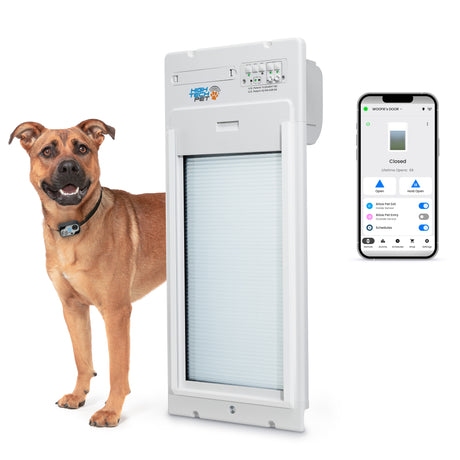


It's easy to assume a cat door is too small to matter for your home's energy bill or weatherproofing — it's just a little flap, after all. In practice, a poorly sealed cat door behaves like a permanently cracked window: small opening, steady draft, and a slow but real hit to both comfort and heating or cooling costs. If you're installing a cat door in an exterior wall or door, weatherproofing deserves the same attention you'd give a full-size door, not an afterthought.
Why a "little" opening still matters
A cat door might be a fraction of the size of a standard exterior door, but it's still a hole in your home's envelope — the barrier that keeps conditioned air in and outside weather out. An unsealed or poorly insulated cat door lets that barrier leak continuously, not just during storms, which adds up over a full heating or cooling season more than most owners expect from something so small.
What "insulated" actually means on a cat door
Not every cat door labeled "insulated" delivers the same performance. Look specifically for a foam-core or double-walled flap panel, not just a slightly thicker single layer of plastic, and a magnetic or brush seal around the flap's edge that closes tightly rather than just settling back into place. The flap is doing most of the insulating work, so it's worth more scrutiny than the frame around it.
Where the real leaks happen: the frame, not just the flap
Owners tend to focus on the flap itself, but a significant amount of air leakage happens around the frame where the door meets the wall or door panel — gaps in the installation, not the product design. A well-sealed frame with weatherstripping around its full perimeter matters as much as the insulated flap itself, and it's the part that depends most on careful installation rather than just product selection.
Cold weather performance and energy efficiency
In genuinely cold climates, an inadequately sealed cat door isn't just a comfort issue — it can create a noticeable cold spot in the room it's installed in, and your heating system compensates by working harder to offset it. An energy-efficient cat door pairs proper insulation with a tight seal on both the flap and the frame, so the opening isn't quietly working against the rest of your home's insulation.
Exterior wall vs. glass or door installation
Where you're installing the cat door changes what to prioritize. A cat flap set into an exterior wall benefits from a fully framed, insulated tunnel through the wall thickness, not just a flap mounted flush against thin material. A cat door installed into an existing exterior door or glass panel needs a tight fit against that specific material — glass installations in particular require a proper sealing kit, since a gap around a glass cutout is one of the more common places cold air sneaks through.
Ready to Upgrade?
Choosing a weatherproof cat door comes down to three things: a genuinely insulated flap (not just a marketing label), a sealed frame installed as carefully as the product itself is designed, and a setup matched to where you're actually installing it — wall, door, or glass. Get those right and the "little" cat door stops being the weak point in your home's weatherproofing.