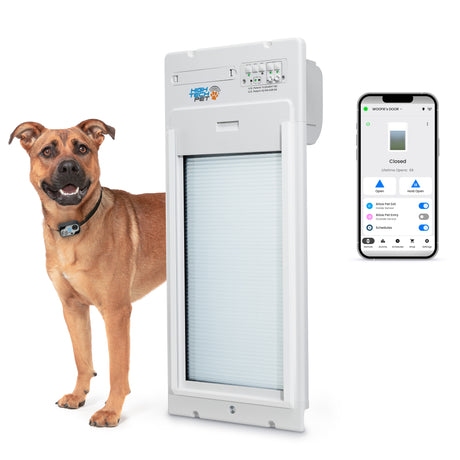


With so many pet door styles, sizes, and installation types on the market, "choosing the right one" can feel more complicated than it needs to be. The good news is that most of the decision comes down to three straightforward questions: what pet is using it, what type of door or opening fits your home, and how secure and weatherproof does it actually need to be.
Start with your pet, not the door
Before comparing products, get specific about who's using it — species, size, and whether more than one pet needs access. A door sized and authenticated for a large dog is a different purchase than one built for a cat, and a household with both needs to confirm cross-compatibility rather than assuming any "universal" door works equally well for everyone.
Types of pet doors: flap vs. electronic
A basic flap door is the simplest and cheapest option, but it offers no selectivity — anything that pushes on it gets through. An electronic or automatic pet door adds a locking mechanism tied to a collar sensor or microchip, so only your registered pet can trigger it. If keeping out wildlife, strays, or other neighborhood animals matters to you at all, this is the single biggest factor in your decision.
Where it's going determines a lot
Pet doors can be installed into a wall, an existing door panel, a sliding glass door, or even a window, and each substrate has different requirements. A wall installation gives you the most flexibility in sizing and placement. Installing into an existing door panel is often simpler if you already have a suitable door, though it depends on the door's material and thickness. Sliding glass doors and windows typically use insert panels rather than direct modification. Once you've settled on your pet and door type, this is the point where it's worth looking into how to install a cat door (or dog door) for your specific substrate, since the process differs meaningfully between a wall, a door panel, glass, and a window.
Security features to prioritize
How much security you need depends heavily on the opening size and location. A cat-sized door on an interior room has very different stakes than a large dog door on an exterior, ground-floor wall. For larger openings especially, prioritize a genuine locking mechanism over a simple latch, since a bigger opening is also a bigger potential entry point.
Weatherproofing and climate
If the door is going into an exterior wall or door, check for an insulated panel and a properly sealed frame — this matters in both hot and cold climates, not just places with harsh winters. A poorly sealed pet door creates a year-round draft that shows up on your energy bill whether you're heating or cooling.
Multi-pet households
If more than one pet will use the same door, check whether the model supports multiple registered collars or chips with independent settings, rather than one shared configuration. This becomes especially important when pets have different needs — different sizes, different access schedules, or one pet that needs more restricted access than another.
Ready to Upgrade?
Choosing the right pet door comes down to matching the door to your specific pet, picking the right type for your home's opening, and prioritizing security and weatherproofing based on your actual situation — not just picking whatever's most popular. Get those three right, and the specific model becomes a much easier choice.