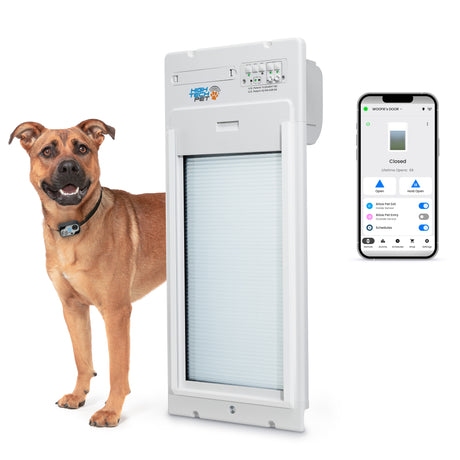


If your main access to the backyard is a sliding glass door, the usual pet door advice doesn't quite apply. You're not cutting into a wall or an existing swing door — you're working within a track system and a large glass panel, which changes both the installation and what to look for in a good product.
Why sliding glass doors need a different approach
A wall-mounted or swing-door pet door involves cutting an opening into solid material and framing it. A sliding glass door pet door works completely differently: it's typically a separate insert panel that fits into the existing track, replacing one section of the slider rather than modifying the glass itself. That's a meaningfully different installation process, and it's worth understanding before you assume the same product that works on a wood door will work here.
How the insert panel actually works
Most sliding glass pet doors come as a framed panel sized to fit your specific track width and height, with the pet door itself built into that panel. It sits in place of one of the sliding sections, sealed against the frame on all sides, and your existing sliding door still opens and closes around it normally. This means accurate measurement of your track's dimensions matters more here than almost any other pet door installation type.
The no-cutting advantage
One of the biggest appeals of this style is that it typically doesn't require permanently modifying your actual glass door — you're adding a panel within the track, not cutting a hole in tempered glass. That makes it a strong option for renters, or for anyone who doesn't want to make a permanent modification to an expensive glass door. If you move, in many cases the panel comes with you and the original slider goes back in.
Sizing is more constrained than a wall installation
Because the pet door has to fit within a panel sized to your track, you're working within tighter size constraints than a wall-mounted unit, which can be built to whatever opening you want. This usually isn't a problem for cats and small-to-medium dogs, but it's worth checking a specific model's maximum pet size against your dog's actual measurements before buying, rather than assuming a sliding glass insert scales up as easily as a wall unit.
Security considerations specific to sliders
Sliding glass doors are already a common point of scrutiny in home security, since a slider's latch can sometimes be defeated more easily than a deadbolted swing door. Adding a pet-sized opening into that same door deserves the same attention — look for an insert with genuine selective locking (collar or chip-based) rather than a simple flap, and consider whether the insert panel itself adds or reduces the slider's overall security compared to your current setup.
Weatherproofing at the panel seal
Because the insert sits within a track rather than a solid wall, the seal between the panel and the existing door frame is doing a lot of the weatherproofing work. Look for a model with a genuinely tight seal along all edges of the insert, not just around the pet door flap itself — a gap at the panel's edges leaks just as much air as a gap around the flap would.
Ready to Upgrade?
A sliding glass door pet door is a different product category from a wall or swing-door unit, not just a different installation method. Get the track measurements right, understand the size constraints you're working within, and don't treat security and weatherproofing as afterthoughts just because the installation itself is simpler than cutting into a wall.