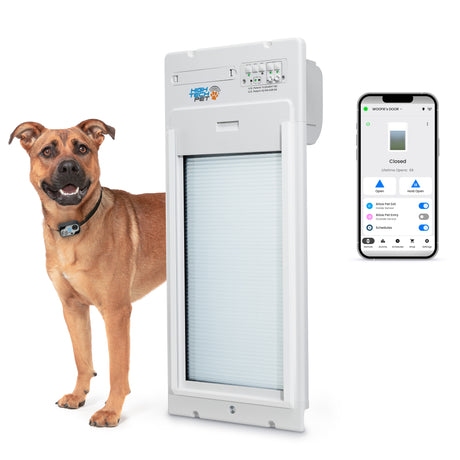


Most people think of cat doors as an outdoor thing — a way to let the cat into the yard. But some of the most useful installations happen entirely inside the house, on interior doors, solving problems that have nothing to do with the outdoors at all. If you've got a multi-pet household, a shy cat, or a litter box location that's become a daily hassle, an indoor electric cat door solves more of that than people expect.
Why interior installations are becoming more common
An interior cat door lets you keep a door closed — for temperature control, noise, privacy, or just tidiness — while still giving your cat unrestricted access to whatever's on the other side. That's a meaningfully different use case than an exterior door, and it's why more owners are installing them on laundry room doors, basement doors, and bedroom doors, not just exterior walls.
Keeping the dog out of the litter box
This is one of the most common reasons owners install an indoor cat door: a dog that treats the litter box like a snack bar. A cat-sized electric door installed on the litter room's door lets your cat come and go freely while a dog simply can't fit through — no more shutting the door and having to remember to reopen it, and no more finding evidence that the door didn't stay closed.
Protecting cat food from a food-motivated dog
The same problem shows up around feeding stations. A dog large enough to be a real behavior issue at the litter box is usually just as motivated by cat food, which tends to be more calorie-dense than dog food. An indoor cat door on the room where your cat eats solves this the same way — selective access for the cat, a closed door for everyone else.
Giving a shy or lower-ranking cat a private retreat
In multi-cat households, one cat is often more anxious or lower in the household hierarchy than the others, and having a dedicated space they can retreat to — inaccessible to the more assertive cat — genuinely reduces stress. An interior cat door lets you designate a real retreat room without needing to physically open and close a door for one specific cat throughout the day.
Keeping the rest of the house closed off without inconveniencing your cat
Beyond pet management, interior cat doors are just convenient. A closed door keeps a room's temperature controlled, keeps noise contained, or keeps a workspace tidy — all things you'd otherwise have to sacrifice to let your cat move freely through the house. An electric cat door removes that tradeoff entirely.
Why "electric" matters indoors too, not just outdoors
A plain cutout or manual flap technically lets a cat through, but it doesn't solve the actual problem in most of these situations — a small dog or a determined cat rival can often fit through a cat-sized opening too. The selective locking on an electric cat door, triggered by a collar sensor or microchip, is what actually keeps the wrong animal out, indoors just as much as it does outside.
Ready to Upgrade?
An indoor electric cat door isn't just a smaller version of an outdoor one — it solves a completely different set of everyday problems, from litter box access to protecting food to giving a cat their own space. If you've been propping a door open (or closing it and forgetting to check on your cat), this is the fix that doesn't ask you to compromise on either.