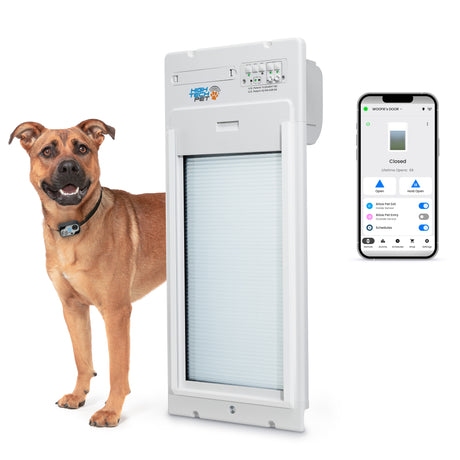


A large doggie door carries more mechanical stress than a standard-size one — heavier flaps, bigger dogs pushing through with more force, and larger components generally. That means maintenance deserves a bit more attention and frequency than a smaller installation would need.
Why large doors need more frequent checks
The size and weight involved in a large doggie door mean components wear under more force with every use than they would on a smaller door. What might be an annual check on a standard pet door is worth doing more often here, simply because the physical stress on hinges, seals, and locking hardware adds up faster.
Check the locking mechanism regularly
If your large doggie door has a deadbolt or other true locking mechanism, test it periodically rather than assuming it's still functioning correctly just because the door still opens and closes. Confirm it engages fully and holds securely, since a locking mechanism under more mechanical stress from daily large-dog use is more likely to develop play or misalignment over time than a lighter-duty latch.
Inspect the flap and hinges for wear
A heavier flap built for a large dog puts more ongoing stress on its hinge points than a lightweight cat-sized flap does. Check periodically for looseness at the hinge, cracking near the mounting points, or a flap that no longer swings freely — these are the parts most likely to show wear first given the repeated force of a large dog pushing through.
Reseal a larger frame perimeter
Because a large doggie door has proportionally more sealed edge to maintain, check the weatherstripping around the entire frame periodically rather than assuming a small visible gap is the only issue. Reseal as needed — large frames tend to show draft issues more noticeably than small ones simply because there's more perimeter for a seal to fail along.
Maintain the electronics if it's an automatic model
For electronic large doggie doors, check the collar's battery or charge status regularly, and periodically retest the collar's response range — daily heavy use from a large dog can sometimes shift how consistently the door responds compared to when it was first calibrated. A quick range test every few months catches drift before it becomes a reliability problem.
Confirm the structural reinforcement is holding
Because large installations typically involve more significant framing or reinforcement than a standard door, do an occasional visual check for any shifting, gaps, or looseness in the surrounding frame or wall material, especially after the first year of heavy use. Catching early settling is far easier to address than a structural issue that's gone unnoticed for years.
Ready to Upgrade?
A large doggie door holds up well over time with a bit more maintenance attention than a standard-size door needs: regular lock checks, flap and hinge inspection, full-perimeter resealing, electronics upkeep if applicable, and an occasional structural check. Build these into a seasonal routine, and a well-installed large door stays reliable for years.