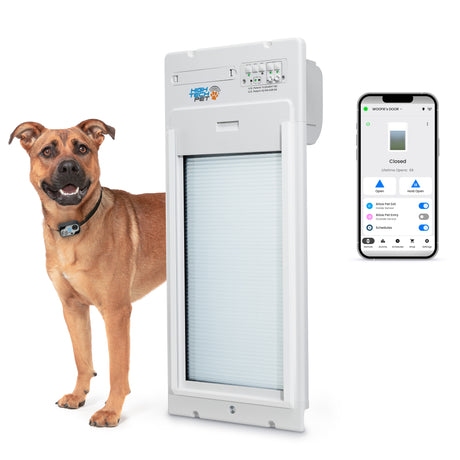


"Interior cat door" covers more product variety than the term suggests — from a basic swinging flap to a fully electronic, selectively-locking unit with a matched frame finish. Here's a look at the range of styles and options actually on the market.
Basic flap-only doors
The simplest style is a plain flap on a hinge, with no locking mechanism at all — just a low-resistance swinging panel your cat pushes through in either direction. This style is the least expensive and easiest to install, and it's a reasonable choice for households where selective locking isn't a priority.
Magnetic closure flaps
A step up from a plain flap, magnetic closure models use small magnets along the flap's edge to keep it closed more firmly than gravity alone, reducing rattling and improving the seal against drafts — useful even indoors if the door separates a heated and unheated space, or just for a quieter close.
Electronic, selectively-locking models
These use a collar-worn transmitter or a microchip reader to control access, so the door only opens for a specific registered pet. Collar-based versions tend to have faster response and longer range; chip-based versions skip the collar but usually require the cat to get closer to trigger it. This style is the right choice anywhere you need to keep another pet out, not just let your cat through.
Tunnel inserts vs. flush flap mounts
Thicker doors, or installations where the door has some depth to it, often use a tunnel-style insert that spans the full thickness of the door panel. Thinner doors typically use a flush-mounted flap assembly instead. Which style fits depends on your specific door's thickness, so it's worth confirming before assuming either style will work.
Frame finishes and color matching
Beyond mechanism type, interior cat doors come in a range of frame finishes — white, brown, black, and metallic tones are common, with some manufacturers offering paintable frames if you want an exact match to your door's existing color. This matters more for interior doors than exterior ones, since an interior cat door is visible as part of your home's everyday décor rather than tucked into an exterior wall.
Size and shape variety
Standard flap shapes are the most common, but some manufacturers offer taller, arched openings, or sizing options that comfortably fit both a cat and a small dog through the same opening. If more than one type or size of pet will use the door, checking the shape and size options available — not just the smallest or cheapest listing — is worth the extra look.
Ready to Upgrade?
Interior cat doors span a real range of styles: basic flaps, magnetic closures, electronic selective locking, tunnel or flush mounting depending on door thickness, and a variety of finishes and sizes. Knowing the full range makes it much easier to spot the option that actually fits your door and your household, rather than settling for whatever's first in the search results.