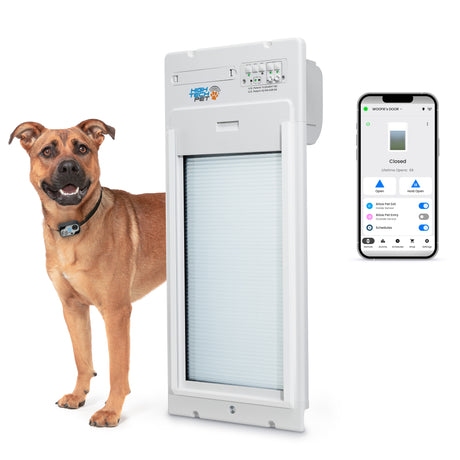


"Insulated" gets used as a marketing term often enough that it's worth understanding what it actually does — and how much it actually matters for your energy bill. Here's the real mechanism behind pet door energy loss, and what a genuinely insulated model changes about it.
How a pet door actually loses energy
Energy loss through a pet door happens two ways: conductive heat transfer through the flap material itself, and air leakage through gaps around the flap and frame. A thin, single-layer plastic flap conducts temperature differences readily, and a loosely fitted frame adds a second, often larger, source of loss through simple air movement — draft, not just material conductivity.
What insulation specs actually mean
A genuinely insulated pet door uses a foam-core or double-walled flap construction, which slows conductive heat transfer the same way double-pane glass does compared to single-pane. Combined with a tight seal — magnetic or brush-lined — around the flap's edges, this addresses both the conduction and the air-leakage sides of the problem. If a product's insulation claim doesn't specify construction details beyond the word "insulated," it's worth asking what's actually different about the material.
The real-world cost impact
A single pet door isn't going to swing your energy bill dramatically on its own, but a poorly sealed one behaves like a small, permanently cracked window — a continuous, low-level draft that your heating or cooling system compensates for around the clock, not just during extreme weather. Over a full season, that adds up more than a single small opening might suggest, especially in a home already working hard to maintain temperature in a harsh climate.
How it compares to other common energy leaks
For context, older windows, poorly sealed attics, and gaps around exterior doors are typically bigger energy loss sources in most homes than a single pet door. That doesn't make pet door insulation irrelevant — it's usually a smaller, cheaper fix than replacing windows or re-insulating an attic, and it's one more place a well-sealed home shouldn't leave unaddressed just because it's a smaller opening.
Maximizing efficiency beyond the door itself
Even a well-insulated pet door benefits from a few additional habits: check and refresh weatherstripping periodically, since seals compress and wear over time, and consider using a hold-open or lock-out setting during the most extreme weather stretches rather than leaving the door in standard operation year-round if your climate has genuinely harsh peak periods.
When upgrading pays for itself
If you're currently running an older, uninsulated pet door and live somewhere with real seasonal extremes, upgrading to an insulated model is a relatively low-cost fix compared to most other home energy improvements, and the payback period tends to be faster simply because the fix itself is inexpensive relative to bigger projects like window replacement.
Ready to Upgrade?
An insulated pet door isn't a marketing buzzword when it's built correctly — it's addressing two real, specific sources of energy loss: material conduction and frame air leakage. Understanding that mechanism makes it a lot easier to tell a genuinely insulated door from one that's just using the word.