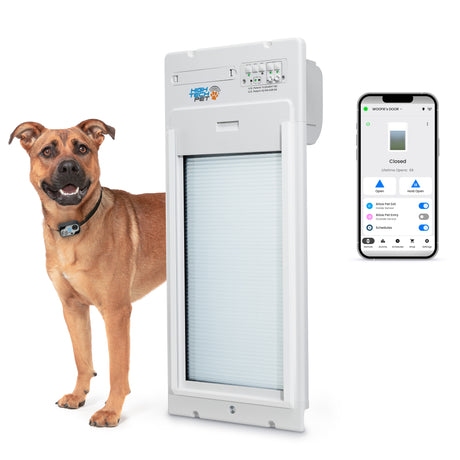


Doors are one of the most overlooked factors in dog safety. Whether it's a wooden exterior door, a glass door, or a garage entry point, how your dog interacts with the doors in your home has real consequences — for escape risk, injury risk, and day-to-day stress on both of you.
Uncontrolled doors are a leading cause of escapes
A dog scratching at a door, darting through when it opens, or being let in and out constantly by hand creates repeated opportunities for an accidental escape. A dedicated doggie door removes the guesswork by giving your dog a consistent, controlled point of entry and exit that doesn't depend on someone opening a door at the right moment.
Glass doors carry their own risks
A glass door dog owners rely on for natural light can pose a real hazard if a dog jumps or collides with it, especially in multi-dog households or with excitable breeds. Installing a dedicated pet door — rather than relying on your dog to navigate a glass door safely — removes that repeated point of risk entirely.
Wooden doors wear down with repeated pet traffic
A dog door wooden door installation deals with different wear patterns than a glass or metal door: scratching, paw traffic, and moisture exposure over time can all affect a wooden door's integrity. A properly installed pet door insert protects the surrounding wood from the wear that comes with a dog pushing against an unmodified door daily.
Dog house doors and outdoor access work the same way
Dog house doors face similar safety considerations to home entry points — proper sizing, weatherproofing, and a controlled opening all matter for outdoor structures just as much as they do at the main house. The same principles that make a pet door safe at your back door apply anywhere your dog needs controlled, independent access.
The best dog door for your door type matters
Not every pet door fits every door type or material the same way. The best dog door for door installations depends on your specific door — its thickness, material, and location — so it's worth confirming compatibility before choosing a model rather than assuming a universal fit.
A dedicated pet door reduces daily risk, not just inconvenience
Beyond convenience, the core safety case for a doggie door is consistency: it removes the daily risk points that come with manual door access — sudden openings, glass collisions, waiting at doors, and slipping past someone during entry or exit. A pet door designed for your specific door type turns those into a single, controlled access point.
Ready to Upgrade?
The doors in your home affect your dog's safety more than most owners realize — from escape risk to glass and wood door wear. A properly fitted doggie door for your specific door type removes much of that daily risk and gives your dog safe, independent access.