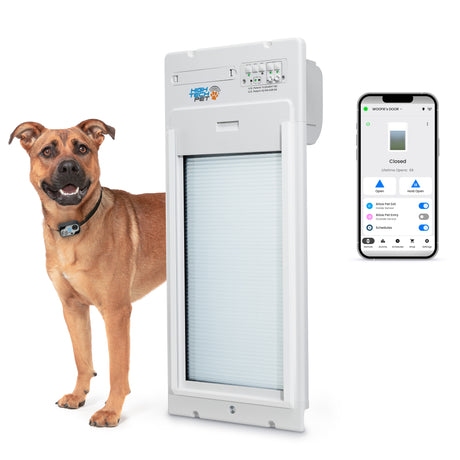


Aluminum doors have become a go-to choice for modern homes — slim frames, a clean finish, and none of the warping or maintenance headaches that come with wood. Adding dog access to one, though, isn't quite as simple as it is with a wood or fiberglass door, and getting it wrong can compromise both the look and the performance of a door you probably chose specifically for its style.
Why aluminum is the modern-home favorite
Aluminum's appeal comes down to a clean, minimal look paired with genuine durability — it doesn't warp, crack, or need repainting the way wood eventually does, and it holds a slim, contemporary profile that a lot of modern home designs are built around. That popularity is exactly why more homeowners are asking whether they can get the style without giving up pet access.
What's different about cutting into aluminum
Wood and fiberglass doors can generally be cut into with standard tools and reinforced relatively simply. Aluminum requires more specialized cutting and, in most cases, a reinforced frame around the opening to maintain the door's structural integrity — aluminum panels are thinner and more rigid than wood, so an unsupported cutout is a bigger structural concession than it would be in a thicker wood door. This is one case where professional installation is worth prioritizing over a DIY approach.
Thermal bridging is a real consideration
Metal conducts heat and cold far more readily than wood, which means an aluminum door already has more thermal bridging to manage than a wood equivalent — and a poorly insulated cutout makes that worse. Look specifically for a dog door insert with a thermally broken frame (a design that interrupts direct metal-to-metal contact between the interior and exterior sides) if you're installing into aluminum, rather than assuming any insulated flap is sufficient on its own.
Condensation in cold climates
Because aluminum conducts cold so effectively, homes in colder climates can see condensation form around a poorly insulated aluminum door — including around a dog door cutout, if the seal and thermal break aren't handled properly. This isn't just a cosmetic issue; persistent condensation around a door frame can lead to real moisture problems over time. A properly insulated insert with a good seal largely avoids this, but it's worth asking directly about thermal performance before you install one in an aluminum door specifically.
Matching the finish for a genuinely integrated look
Part of the appeal of "featuring dog access" rather than "retrofitting a dog door" is the difference between a door designed with the opening built in versus one that's clearly been modified after the fact. If style matters to you as much as function, look for a dog door insert available in a finish that matches your aluminum door's color and hardware, rather than a generic plastic frame that stands out against a sleek metal surface. This applies whether you're outfitting the door for a dog or, with the right sizing, a cat.
Built-in vs. retrofit for aluminum specifically
If you're in the process of choosing a new exterior door, going with one manufactured with the dog door already integrated avoids the cutting and reinforcement question entirely, and it's often the cleaner path for aluminum specifically given the structural considerations above. If you already have an aluminum door you want to keep, a professionally installed retrofit insert with proper reinforcement and a thermally broken frame is the more realistic path — just budget for professional installation rather than treating it as a weekend project.
Ready to Upgrade?
An aluminum door with dog access can absolutely deliver the modern look you're after, but it takes more attention to structural reinforcement, thermal performance, and finish matching than the same project would on a wood door. Get those right, and you end up with a door that looks integrated by design, not modified after the fact.