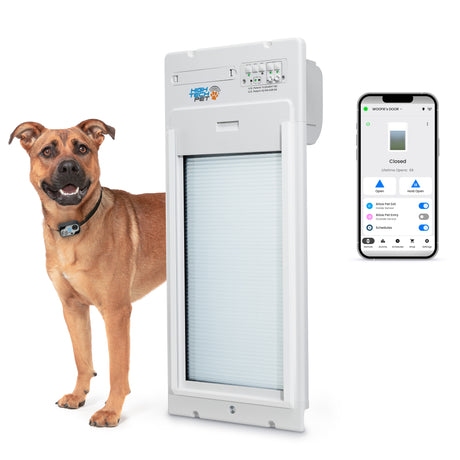


If you're replacing or installing a new patio door and you have pets, it's worth deciding on pet access as part of that purchase, not as an afterthought you retrofit later. A patio door chosen with pets in mind from the start tends to look more integrated and perform better than one modified after the fact.
Why this decision is different from retrofitting
Adding a pet door insert to an existing slider is a common, workable option, but it's a compromise by nature — you're fitting a pet door into a product that wasn't designed around it. Choosing a new patio door with pet access already built in gives you a cleaner result: a consistent seal, matched finish, and a design that doesn't look like an add-on.
Sliding vs. French patio doors
Sliding doors are the more common choice for integrated pet access, since the pet door typically sits within a fixed or sliding panel section. French (hinged) patio doors can accommodate pet access too, but the opening usually needs to go into one of the fixed side panels rather than the operable door itself, since a moving hinged door complicates a built-in pet opening.
Built-in access vs. adding an insert later
If you're not ready to commit to a specific pet door model but know you'll want one, ask whether the patio door you're choosing can accept a compatible insert cleanly later, rather than assuming any slider works equally well. Some frame designs accommodate future inserts far more easily than others, and it's a much easier question to ask before installation than after.
Glass and security considerations
A patio door is one of the larger glass surfaces in most homes, and adding pet access means thinking about both the glass itself (tempered or laminated safety glass is standard for a reason) and the lock mechanism for the door as a whole. If security is a priority, look for a patio door with reinforced multi-point locking, independent of whatever locking mechanism the pet door portion uses.
Material and climate performance
Patio doors come in aluminum, vinyl, and wood-composite frames, each with different thermal performance — aluminum in particular needs a thermally broken frame to avoid the cold-conduction and condensation issues that come with metal framing in colder climates. If you're in a region with real seasonal extremes, factor this into the frame material decision alongside the pet access question, not separately from it.
Multi-pet and cross-species needs
If you've got both a cat and a dog, confirm the built-in pet door option is sized and authenticated appropriately for both — some manufacturers offer a single opening sized for a dog that also comfortably fits a cat, while others require choosing one primary pet size. This is worth settling before you finalize the door, since changing it later means dealing with a retrofit after all.
Ready to Upgrade?
Choosing a patio door for pets comes down to deciding between sliding and French configurations, weighing built-in access against a future insert, and not treating security or climate performance as separate from the pet access decision. Get it right at the purchase stage, and you skip the retrofit compromise entirely.