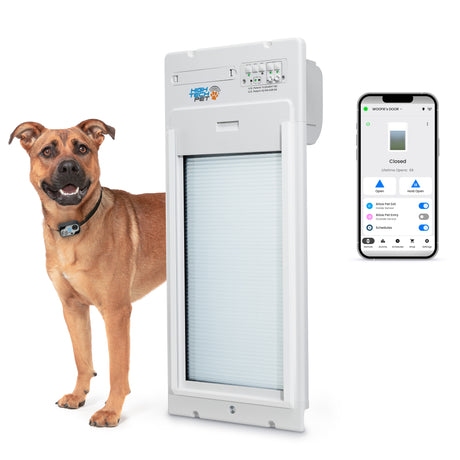


A doggie door can be one of the best upgrades you make for your home and your pet. It gives your dog the freedom to go in and out independently, prevents potty accidents, and allows pets to enjoy outdoor time even when you’re busy - no more doggy doorman duty. But as convenient as they are, pet doors for dogs must be installed, used, and maintained safely to keep your furry friend and your home protected.
Whether you’re researching your first pet door or upgrading to the best dog door for door use in your home, safety comes first. Below are essential tips from High Tech Pet, the leader in smart pet technology, to ensure your new pet door is secure, reliable, and worry-free.
1. Choose the Right Size for Your Dog
The first step in doggie door safety is choosing the correct size. A door that’s too small can cause discomfort or injury, while one that’s too large can let critters, burglars, and weather inside your house.
To find the perfect fit, measure your dog from the top of their shoulders to the floor, and from shoulder to shoulder. Add about two inches to each dimension. This ensures your dog can move comfortably through their pet door without crouching or scraping.
At High Tech Pet, we offer multiple pet door sizes from cats to dogs over 100 lbs. This way, you can select the ideal model whether you have a cat, a Chihuahua, or a Great Dane. A properly sized pet door for dogs minimizes physical strain and keeps the door functioning smoothly for years.
2. Install the Door at the Right Height
Improper installation height is a common safety issue. If your doggie door is too high, smaller dogs may have to jump, straining their joints or just flat out refusing to use the door. Too low, and you risk drafts, water leaks, and increased energy costs.
For optimal results, the bottom of the door’s opening should sit just below your dog’s chest line. This allows them to step through naturally.
Follow the manufacturer’s installation instructions carefully or hire a professional installer. High Tech Pet's line of next-gen pet doors is perfect for DIYers and beginners, and each model comes with step-by-step instructions and installation videos. Correct placement ensures both safety and performance.
3. Pick a Door Made from Safe, Durable Materials
The quality of materials matters to ensure strength and durability. Cheaper doors (think: traditional flaps) made of thin plastic or soft vinyl can crack, warp, or develop sharp edges over time.
Look for pet doors for dogs made of metal or high-strength ABS plastic with rounded, reinforced edges. Premium options like High Tech Pet’s Power Pet® Door features motorized, bulletproof panels that open automatically, eliminating pinch risks and improving safety for pets of all sizes.
If you’re installing a glass door dog panel, choose tempered safety glass or consult a professional glazier to prevent breakage or injury. High Tech Pet’s Power Pet® Door models can mount perfectly in glass patios.
4. Consider Electronic or Smart Pet Doors
Modern doggie doors are smarter and safer than ever. Electronic doors, like High Tech Pet’s Power Pet® Door, only open for your pet’s collar signal.
This means no more raccoons, stray animals, or pests sneaking into your home. You can also control the door yourself using the Power Pet Door app or the manual door controls. This prevents your dog from accidentally slipping out at night or when unsupervised.
These smart pet doors for dogs close automatically once your pet has passed through, ensuring a tight, energy-efficient seal and full protection against outdoor elements. If you want the best dog door for door in terms of security and convenience, an electronic model is the clear choice.
5. Monitor Outdoor Conditions
Even the safest pet door can pose risks if you’re not mindful of outdoor conditions. High winds, extreme cold, or heavy rain can affect how the door functions or how comfortable your pet feels using it.
Make sure the exterior area is free from hazards such as ice, mud, or sharp debris. During hot weather, provide shade and access to water so your dog doesn’t overheat.
If your doggie door leads to a fenced yard, regularly inspect the fence for holes or weak spots. Or better yet, check out humane invisible fences like High Tech Pet's X-10 Rechargeable Multi-Function Electronic Dog Fence. Your pet’s freedom should never compromise their safety.
6. Train Your Dog Properly
Training is key to doggie door safety. Some dogs learn quicker than others.
Start by holding the flap open and encouraging your dog to walk through using treats or toys. Praise them every time they succeed. Over time, lower the flap and let thempush it on their own.
If you have an electronic pet door, training can be easier since the door opens automatically. But still let your dog get used to motion of the door panel sliding up and down before expecting them to use it independently.
Consistent, positive reinforcement helps build confidence and reduces fear or hesitation.
7. Use a Locking or Controlled Access System
A high-quality doggie door should include a locking mechanism for times when you want to limit access. Whether it’s keeping your dog in during Fourth of July fireworks or keeping wildlife out of your cabin overnight, a secure lock is a must.
High Tech Pet’s Power Pet Door system comes with automatic locking panels that engage when the door closes, controlled electronically or via remote. Traditional manual flaps sometimes feature slide-in locking covers, but be sure they’re sturdy and fit tightly.
If you’re considering a glass door dog door model, look for versions that include secure magnetic closures or key-locking inserts for added protection.
8. Maintain and Check Often
Like any home feature, a pet door needs routine maintenance. Dust, fur, and moisture can accumulate around the frame and flap, leading to wear or malfunction.
Every few weeks, wipe down the flap or panel with a mild cleaner and check the seals for cracks. If you notice drafts, replace the weatherstripping or magnets.
For motorized doors, test the collar sensor and safety features monthly. A well-maintained doggie door not only lasts longer but keeps your pet safe.
9. Keep Indoors Safe for Pets, Too
If your pet door connects to an enclosed patio, garage, or laundry room, make sure those spaces are safe for pets too. Remove cleaning chemicals, sharp tools, or electrical cords that your pet might get into.
For glass door dog installations that lead to patios, ensure the area is enclosed and escape-proof. The goal is to give your pet controlled freedom—not full, unsupervised access to the outside world.
10. Choose a Door That Matches Your Lifestyle
Finally, the best dog door for door isn’t just about size or looks. It’s about how it fits your daily routine. If you’re often away from home, an automatic electronic pet door offers peace of mind with controlled access and built-in safety sensors.
If you live in a mild climate and prefer simplicity, a weatherproof manual flap may be sufficient. Just be sure it's a sturdy, energy-efficient option like the DuraFlex or Armor Flex Dog Door or the DuraFlex Heavy Duty Dog Door.
The key is choosing a model that aligns with your pet’s habits, your home’s structure, and your comfort level.
Final Thoughts
Installing a doggie door can dramatically improve your pet’s life and your own, but only when safety and setup are done right. The best pet doors for dogs combine durable materials, secure locking mechanisms, and smart technology that protects your pet and your home.
From energy-efficient sealing to automatic locking systems, High Tech Pet’s Power Pet® Door represents the safest, smartest solution available. Whether you’re looking for a wall-mounted option, a glass door dog insert, or the best dog door for door use, our pet doors perform the best, backed 40 years of innovation.
Give your pet freedom and yourself convenience. Explore our complete line of doggie doors and see why thousands of pet owners trust us to keep their furry family members safe, secure, and happy.