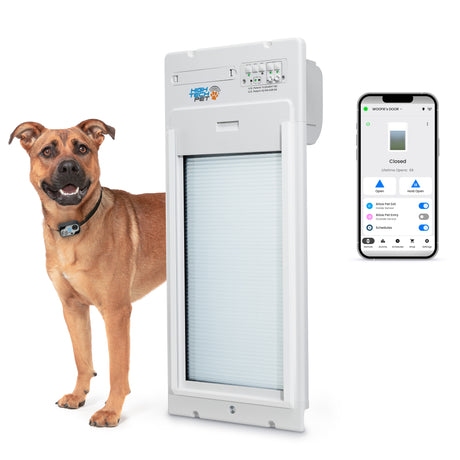


An interior cat door is a simpler product than an exterior one in some ways — no weatherproofing to worry about — but it comes with its own set of decisions that exterior-door buying guides don't cover. Here's what actually matters when you're choosing one for use inside your home.
Interior vs. exterior: what's actually different
Exterior cat doors have to account for weather sealing, insulation, and security against outside threats. Interior doors skip all of that, which means the buying decision shifts almost entirely to door compatibility, noise, and whether you actually need selective locking for this specific room — a different set of priorities than an outdoor installation.
Door material compatibility matters more than people expect
Most interior doors are hollow-core, not solid wood, which changes what kind of cat door insert is appropriate. A frame or insert designed for solid material may not seat properly in a hollow-core door without additional reinforcement around the cutout. Check the product specs against your actual door type before buying — this is one of the more common installation headaches with interior doors specifically.
Do you actually need selective locking indoors?
This is worth deciding deliberately rather than defaulting to whatever's marketed as "smart." If the goal is simply letting your cat move between rooms freely, a basic flap is often enough — there's no outside wildlife to keep out. If the goal is keeping a dog out of a litter box or food room specifically, you do need genuine selective locking via collar or chip, since a plain flap won't discriminate between pets.
Noise matters more here than outdoors
An interior cat door near a bedroom or living space puts any flap noise or mechanism click much closer to where people are trying to sleep or relax, compared to an exterior door where that noise happens further from daily life. If noise is a concern, prioritize a soft-close flap design and, if you're going electronic, check for a quiet-operating lock mechanism specifically.
Sizing against interior door hardware
Interior doors often have different hardware placement and panel thickness than exterior doors, and a cat door insert needs to clear existing hardware like knobs or hinges without interference. Measure against your specific door's hardware layout, not just the door's overall dimensions, to avoid a conflict you don't discover until installation.
Manual override and privacy features
For rooms where you sometimes want full closure — when guests are over, or during a temporary need to keep pets separated — a manual override or lock-out setting is worth having, even on a door you'll usually leave selective or open. Not every interior model includes this, so it's worth checking for explicitly if you know you'll want it occasionally.
Ready to Upgrade?
Choosing the right interior cat door comes down to matching it to your actual door material, deciding honestly whether you need selective locking or just a simple flap, prioritizing quiet operation if it's near living spaces, and checking hardware clearance before you buy. Get those right, and an interior installation is usually simpler than an exterior one — just different, not lesser.