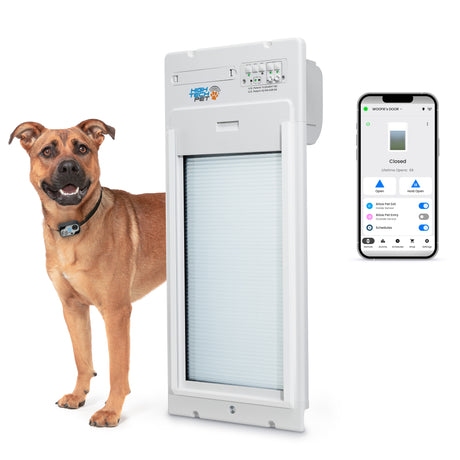


An interior dog door works differently than an exterior one — no weather exposure, but frequent use as your dog moves freely between rooms. That different use pattern means a slightly different maintenance routine.
Check the flap and hinge for wear from frequent use
An interior door with doggie door installed between high-traffic rooms often sees more daily passes than an exterior door does. Check the flap and its hinge periodically for looseness or wear, since frequent back-and-forth movement between rooms adds up faster than you'd expect.
Confirm alignment hasn't shifted
An interior door with pet door built in relies on the flap sitting flush and centered to swing properly. Interior doors can shift slightly on their hinges over time from regular use, so periodically confirm the pet door insert is still aligned correctly within the frame.
Address any noise or rattling
Because an interior dog door doesn't need weatherproofing the way an exterior one does, any rattling or noise you notice is usually a sign of a loose flap or frame rather than a seal issue. Tightening the mounting hardware typically resolves it.
Clean regularly to prevent buildup
An interior door with dog door use tends to collect pet hair and dust at the flap edges faster than exterior doors, simply from being in conditioned indoor air with more foot traffic nearby. A quick wipe-down of the frame and flap edges every so often keeps it moving freely.
Watch for wear specific to your door material
An interior dog door installed in a hollow-core or lighter interior door can wear differently than one installed in a solid exterior door. Periodically check the surrounding cutout for any stress cracking or loosening, especially if the door sees heavy daily use.
Keep the fit secure over time
An interior door with pet door installations should stay snug in the cutout even after months of use. If you notice any gap forming between the insert and the door itself, a simple hardware tightening usually addresses it before it becomes a bigger repair.
Ready to Upgrade?
Interior dog doors face different wear patterns than exterior ones — more frequent use, less weather exposure. Regular checks on flap alignment, hinge wear, and mounting hardware keep an interior installation working smoothly for years.